Parga

Home Parga

Parga, an island on mainland Epirus!

Although Parga is not an island, the bay and its small island seem ready to float away into the roaming Ionian sea that keeps secrets and takes them away.

Gifted by nature and history, Parga, the picturesque town of Epirus, has experienced a lot in its long course over the centuries. But she kept her pride and her inexhaustible beauty.

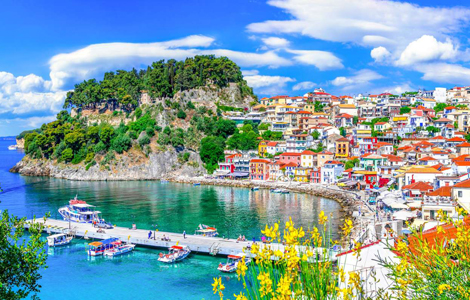
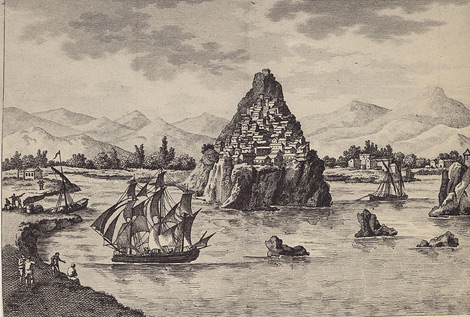
Set amphitheatrically against the green mountainside, Parga overlooks the picturesque bay and the small island in the calm waters of the harbour. On a small hill on the island is an old French castle and the Church of the Panagia, which sits proudly with a tall white bell tower, rising like white cloth in the light. The island too is ready to float away on the sea.

At the end of the harbour is the Venetain castle, considered the jewel of the town but the colours on the right will also attract your gaze, these are the brightly painted two and three story houses of the town with the special island architecture that give Parga that traditional island colour. The town is full of colour and light, cobbled streets with narrow winding paths ascending past archways, traditional wooden doors and flowered courtyards. Surrounded by undulating green hills descending towards the sea where the coast is decorated with clear water beaches.
history of parga

The History of Parga

history of parga
history of parga

Parga binds its stories in the wind and as they unfold they give a unique picture of all the events this place has to share and tell……

In ancient times Parga was known as the Epirot port of Elaia. In the ancient scripts of Plutarch and Ptolemy it was referred to as the Hellenistic town of Torini or Toroni (3rd, 4th century B.C.). From the Byzantine period onward it was a refuge for Epirots to avoid raids. The advantageous geographical position made it susceptible to invasions, pirate attacks and raids.The Normans protected Parga from 1360 to 1393 but in 1400 it was seized by the tyrant Bogoi.

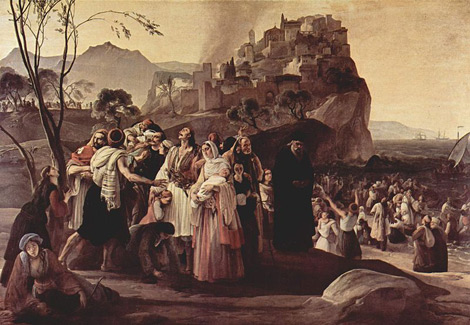
On his departure in 1401 he signed a treaty with Venice which lasted almost 400 years. It was during the Venetian rule that the town was fortified, the castle built and Parga developed economically becoming a trading centre of strategic importance. A short French rule followed in 1797 and then in 1814 the English took over rule until they sold it to Ali Pasha in 1819, for the price of 150,000 pounds. Ali Pasha raised the money by imposing an extraordinary tax on his pasaliki. Ali Pasha had besieged Parga for many years but had not succeeded in conquering the town despite building a fortress in Anthoussa, a mountain village behind Parga. From here he had attempted many times to co-ordinate a siege of Parga. The fortress remains in relatively good condition to this day. After the sale of Parga, the 4000 inhabitants were forced to leave and take refuge in Corfu. Before boarding the boats they tried to gather sacred processions and relics from their churchs but the English prevented them. In desperation they dug up the bones of their ancestors and burned them in village square in front of the English, then they gathered the ashes into sacks and carried them with them to Corfu. The exile of the Parginians was a black day in history which inspired many artists to portray it in their works of art and the sorrow of the exiles was relayed through local folk songs. Despite the exile many Parginians and Souliots continued to support the Greek revolution with their efforts and some, such as Markos Botsaris and Kitsos Tzavelas became known throughout Greece for their struggles and bravery.

Parga was liberated on 23rd February 1913 and the exiled Parginians returned to their homeland.

The Castle

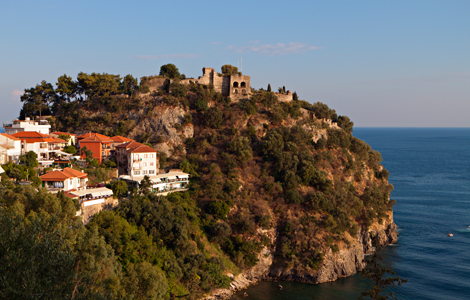
Parga’s castle is on the promontory hill at the harbour entrance. It is a fortress complex that was first built by the Normans in the 14th century. In 1537 it was completely destroyed by the Turkish pirate Hayredin Barbarossa who, with his 200 ships, had destroyed all of the Venetian posts in the Ionian and Aegean seas. The Venetians rebuilt the castle in 1572 giving the final form visible today. They built 8 outside towers and over time a total of 400 houses which due to the lack of space consisted of just one room. The castle was impregnable and Ali Pasha was unable to conquer it throughout his administration. It offered protection to the Souliot fighters that opposed him and when Parga was sold to him, Ali Pasha fortified it even more and installed a harem and a hammam at the top of it. Today the castle open to visitors who can explore the remaining buildings.

The Castle of parga

The Parga

the beaches of Parga

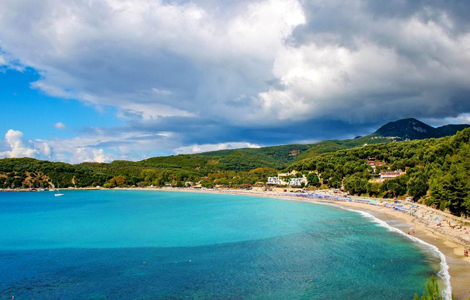
The castle has a clear view of Valtos Beach with a paved path leading you down to it. Valtos is the longest beach in Parga at nearly 3km in length. There is a smaller beach, Krioneri, that has a tall rock called Skordas and further east is Piso Krioneri which is surrounded by high rocks. 3km east of Parga is Lichnos Beach which is backed by an abundance of trees. Near to Lichnos Beach is the picturesque cove of Ai Giannakis with its underwater source of fresh water. Parga belongs to the prefecture of Preveza although it is surrounded geographically by the prefecture of Thesprotia. The headquarters are in Kanalaki. The population of Parga and nearby towns og Agia, Anthoussa and Livardario is 12,747 inhabitants.

In the summer months there are daily boat trips to Paxos and Antipaxos. Boats also run to Ammoudia, Lefkada and Corfu. Just 15m away is the Ancient Necremanteion and the Acheron River.